
What I’ve Learned About Website Design & UX

Over the years, one of the biggest lessons I’ve learned in website design and UX is that good design is ultimately about making choices. You can’t include everything or be everywhere.
Good Design Is About Making Choices
When organisations try to pack in every feature or idea, the result is often a cluttered, slow, confusing experience – and an overwhelmed internal team. This applies just as much to marketing and social media as it does to websites: focus on a few things and do them well (Nielsen Norman Group, 2020).
Choosing What to Keep (and What to Let Go)
In practice, web design and UX often means helping clients decide what genuinely supports their goals and play to their strengths.
For one website redesign project, I advised a client that we remove their blog completely because they didn’t enjoy writing and rarely updated it. The guilt over neglecting it prevented them from focusing on social media, where they genuinely thrived. By contrast, another client had strong social content but no owned space to develop their content opportunities further. I designed a bespoke blog that allowed them recycle content, improve their SEO and strengthen their inbound strategy (HubSpot, 2023).
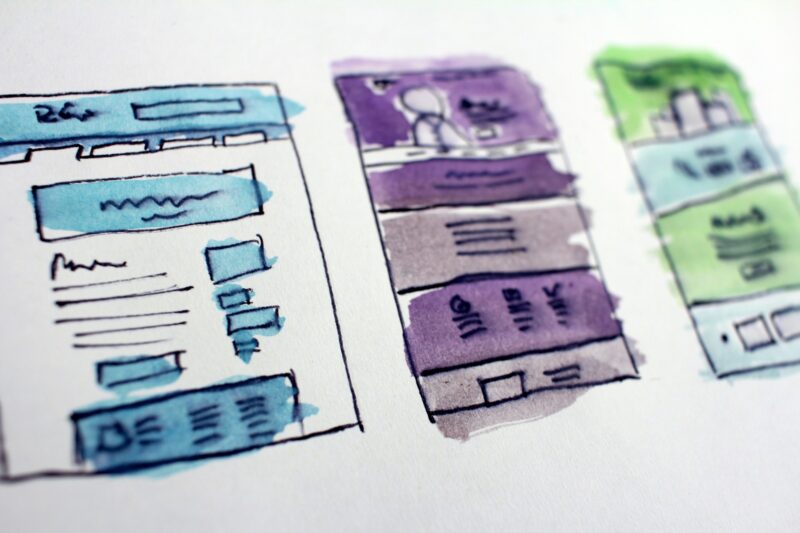

Function First, Aesthetics Second
I’ve also observed how often businesses focus on appearance before function. One very creative client was fixated on how their website looked – the colours, the shapes, the textures – but their original site was a maze of pages, dead ends and inconsistent content.
William Morris’s maxim is classic for a reason: “Have nothing in your house that you do not know to be useful or believe to be beautiful.” In UX, the order matters – useful first, beautiful second. Aesthetic decisions only add value when they support usability; otherwise even beautiful design becomes frustrating (Nielsen Norman Group, 2020).
The Hidden Impact of DIY Technology
Technology choices matter too for your website’s performance. In my experience, clients are often either unaware of, or intimidated by, the technical side of websites. I sympathise: cybersecurity risks and website hacks have increased significantly in recent years. Ignoring the technical side is tempting but super risky.
The democratisation of technology in many respects is great. It empowers small businesses to get a good looking website up and running very quickly at low cost. Website platforms now offer AI-assistance to their customers too. But it still does pay to get a professional in. When auditing a Wix site recently, I found its load time was six times slower on mobile than recommended benchmarks — largely due to excess code in the CMS (Google, 2022).


Strategy Before Urgency
A lack of clarity on your goals can be fatal, leading to a cascade of bad decisions. One charity I worked for had switched from WordPress to a custom-built Drupal site to integrate with another digital initiative that hadn’t been user-tested.
That project ultimately failed, leaving them with a rigid website where even small template updates required developer intervention along with the sunk cost of the website migration and the failed legacy project. Years later, they rebuilt the site in WordPress to empower internal staff, reduce costs and also take advantage of free and easy to use multilingual plug-ins for their international audience.
A client recently contacted me in a panic asking if I could take their website temporarily down. After asking some questions about their requirements, it was clear they had arrived at this decision quickly, without considering their existing customers and maintaining business continuity. Reactive decisions rarely support good UX and I gave them some friendly advice on other quick solutions instead.
Walk In Your User’s Shoes
Ultimately, delivering a great user experience means stepping outside your own assumptions. That’s not always easy when you are so close to your website and business: you can’t read the jam jar label from inside the jar. Clear, supportive user journeys only emerge when you look at your website through someone else’s eyes – your customers’.
And sometimes, that shift in perspective is easier with a fresh pair of eyes. A flexible, experienced marketing freelancer (like me!) can act as a kind of digital MOT. I can offer practical guidance, spot issues you’ve gone blind to, and help you prioritise improvements even if you don’t have the budget for a full rebuild. A small friendly steer at the right moment can save you a great deal of time, money and frustration.
ReReferencesRefReferences
Google (2022) Principles of Mobile-First UX. Available at: https://developers.google.com (Accessed: 22 November 2025).
HubSpot (2023) The Ultimate Guide to UX Design. Available at: https://blog.hubspot.com/marketing (Accessed: 22 November 2025).
Nielsen Norman Group (2020) Usability 101: Introduction to Usability. Available at: https://www.nngroup.com/articles/usability-101-introduction-to-usability/ (Accessed: 22 November 2025).
Morris, W. (1880) Hopes and Fears for Art. London: Ellis & White